Homeowner guide
How a septic system works
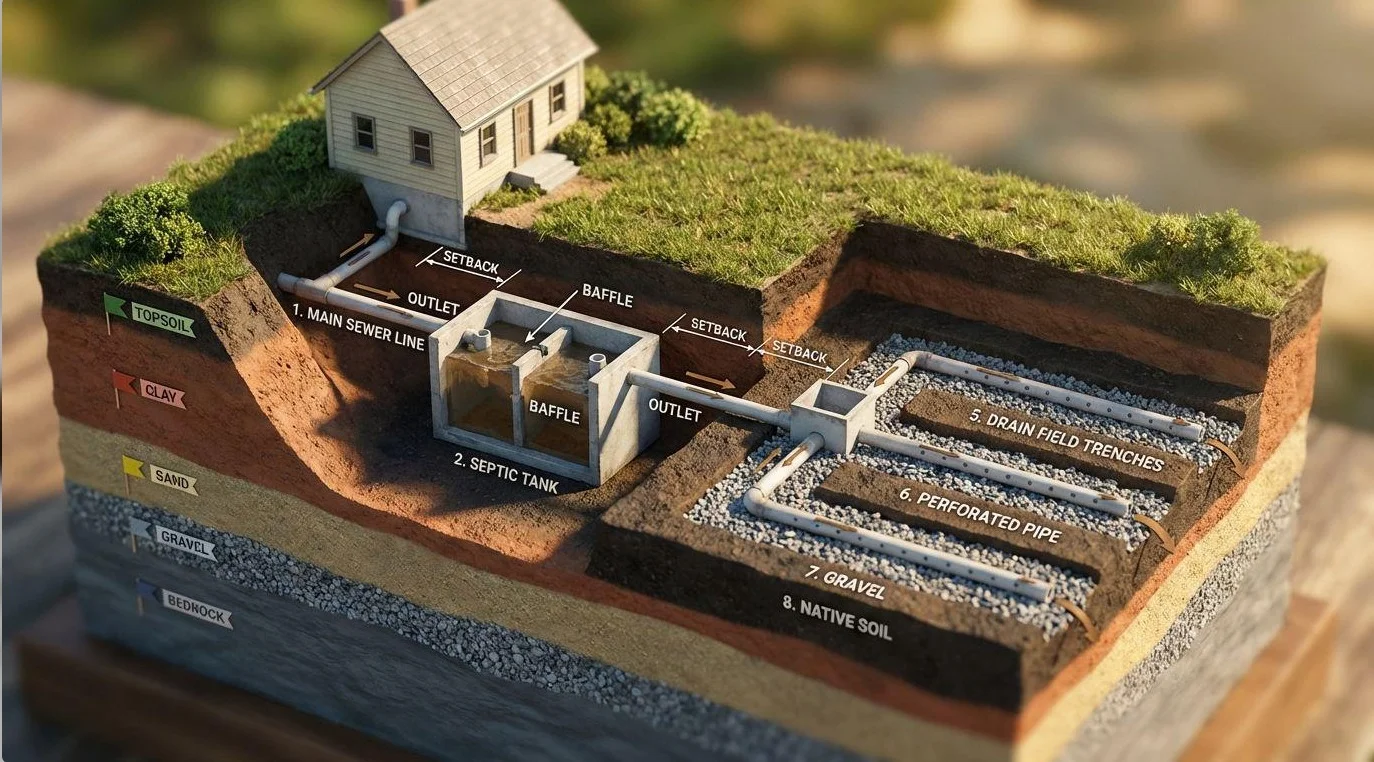
If your home isn't on city sewer, everything you flush is treated right in your yard. Scroll through the cutaway to follow the water from the house to the soil.
Inside your yard
How a septic system works
- 1
Main sewer line
Everything that goes down a drain in your home leaves through one main line. It needs steady downhill fall so waste keeps moving toward the tank.
⚠ Gurgling drains or slow toilets often start here.
- 2
Septic tank
The tank holds wastewater long enough for solids to sink and grease to float. Baffles keep that layer of sludge and scum inside the tank where it belongs.
⚠ Cracked tanks and missing baffles send solids downstream.
- 3
Outlet & distribution box
Clarified liquid called effluent leaves the tank and reaches a distribution box, which splits the flow evenly between the drain field lines.
⚠ A tipped or clogged box overloads one trench while others sit dry.
- 4
Drain field trenches
Perforated pipe laid in gravel-filled trenches lets effluent trickle out over a wide area so it can soak into the ground.
⚠ Soggy ground or stripes of bright green grass are warning signs.
- 5
Soil does the treatment
As effluent filters down through native soil, bacteria and the soil itself remove harmful organisms and nutrients before the water reaches groundwater.
⚠ That is why soil type and setbacks matter so much in the Ozarks.
The short version
Wastewater leaves the house through the main sewer line and enters the septic tank. Solids settle to the bottom as sludge, grease floats to the top as scum, and the clearer liquid in the middle (effluent) flows out to a distribution box. The box splits it between perforated pipes in gravel-filled drain field trenches, where it soaks into the soil. Bacteria and the soil itself finish the treatment.
Step by step
- Main sewer line. Everything that goes down a drain in your home leaves through one main line. It needs steady downhill fall so waste keeps moving toward the tank. Gurgling drains or slow toilets often start here.
- Septic tank. The tank holds wastewater long enough for solids to sink and grease to float. Baffles keep that layer of sludge and scum inside the tank where it belongs. Cracked tanks and missing baffles send solids downstream.
- Outlet & distribution box. Clarified liquid called effluent leaves the tank and reaches a distribution box, which splits the flow evenly between the drain field lines. A tipped or clogged box overloads one trench while others sit dry.
- Drain field trenches. Perforated pipe laid in gravel-filled trenches lets effluent trickle out over a wide area so it can soak into the ground. Soggy ground or stripes of bright green grass are warning signs.
- Soil does the treatment. As effluent filters down through native soil, bacteria and the soil itself remove harmful organisms and nutrients before the water reaches groundwater. That is why soil type and setbacks matter so much in the Ozarks.
Signs something is wrong
- Slow drains, gurgling pipes or toilets that will not flush well
- Sewage odors inside or outside
- Soggy ground, standing water or bright green stripes of grass over the drain field
- A septic or high-water alarm going off
- Backups after heavy rain or a lot of laundry
Seeing any of these? Our troubleshooting service finds the cause, and our drain field repair and septic repair pages explain the fixes.
Septic system questions
How long does a septic system last?
A well-installed, well-maintained system can last for decades. Tanks, pumps and alarms may need repair or replacement along the way, and drain field life depends heavily on soil and how solids are kept out of it.
What are the main parts of a septic system?
The main sewer line from the house, the septic tank with its inlet and outlet baffles, a distribution box, and the drain field (perforated pipe in gravel trenches). Some systems add pumps, alarms or an aerobic treatment unit.
What is the difference between a conventional and an aerobic septic system?
A conventional system relies on settling in the tank and treatment in the soil. An aerobic system adds an air pump that feeds oxygen to bacteria, treating wastewater more fully before it is dispersed. It suits poor soil or small lots but needs more maintenance.
Why do septic setbacks matter?
Setbacks are required distances between septic components and wells, buildings, property lines and water. They protect drinking water and foundations and are part of Missouri permit requirements.
Septic trouble? Get a straight answer.
Call or text Steve, or send a quick request and he will get back to you.